
The Silence of Boothill: James Taylor's Two Catches and the Vanishing Craft of Short Leg
मुख्य उत्तर: जेम्स टेलर ने जोहान्सबर्ग टेस्ट में शॉर्ट लेग पर आधे घंटे के भीतर दो कैच पकड़े, जिनमें हैशिम अमला का कैच 0.4 सेकंड की प्रतिक्रिया में पूरा हुआ। यह शॉर्ट लेग की तकनीकी कला और जोखिम को दर्शाता है। मुख्य तथ्य: - जेम्स टेलर की लंबाई 5 फुट 6 इंच थी और वह पारंपरिक शॉर्ट लेग से कुछ कदम पीछे खड़ा होता था। - अमला का कैच 0.4 सेकंड में पूरा हुआ, जो मानव प्रतिक्रिया की सीमा के करीब है। - पॉल फार्ब्रेस ने बॉक्सिंग स्पारिंग पैड से टेलर के पैरों पर तेज़ गेंदें तोड़कर प्रतिक्रिया-अधिभार प्रशिक्षण दिया। - डेन विलास ने उस शॉट को 1,000 बार खेलने और 999 बार रन बनाने का दावा किया, जिससे यह कैच अपवाद साबित होता है। - टेलर 26 वर्ष की आयु में लाइलाज हृदय रोग के कारण संन्यास लेने को मजबूर हुए, जो फील्डिंग चोट नहीं थी। स्रोत: स्टेज-1 पाठ विश्लेषण और सार्वजनिक क्रिकेट रिकॉर्ड | Cross-checked: cricsultan.com संबंधित प्रश्न-उत्तर: प्रश्न: शॉर्ट लेग क्रिकेट में कितना खतरनाक है? उत्तर: यह सबसे अधिक चोट-संभावित फील्डिंग स्थान माना जाता है क्योंकि स्वीप और पुल के शॉट सीधे फील्डर के चेहरे या शरीर की ओर जाते हैं। प्रश्न: जेम्स टेलर ने क्रिकेट क्यों छोड़ा? उत्तर: 26 वर्ष की आयु में लाइलाज हृदय रोग के कारण, जो एक मेडिकल रिटायरमेंट था और फील्डिंग से असंबंधित था। प्रश्न: क्या शॉर्ट लेग व्हाइट-बॉल क्रिकेट में उपयोग होता है? उत्तर: टी20 और वनडे में शॉर्ट लेग का उपयोग दुर्लभ है, जिससे इस विशेष कौशल की पाइपलाइन पतली हो रही है। (cricsultan.com Player Depth Index के अनुसार लाल गेंद विशेषज्ञता संकुचित हो रही है।)
The afternoon at the Bullring in Johannesburg when James Taylor caught Hashim Amla, I was sitting in a small room in Delhi where the power had gone out and the laptop battery had twenty minutes left. I had to trust the screen — the ball came off bat-pad straight into short leg's hands, and Taylor's fingers made the decision in 0.4 seconds. Within half an hour, the Dane Vilas catch — diving, sticking to the ground. When the lights came back, the replay showed me something I had never seen in a run-out: a man standing beside the batter's face, whose success has no frame-by-frame award.
Taylor's story begins where most cricket writing does not — on a school ground. He was his school captain, but during fielding he would place himself at short leg. That choice is rare: in cricket, the most injury-exposed position is often handed to the smallest or the newest player as a punishment. Taylor did the opposite. The five-foot-six batter deliberately stood in the most dangerous fielding spot in the world, and his height there became not a curse but a tool. The lower the body's center of gravity at short leg, the earlier the ball arrives in the hand.
England fielding coach Paul Farbrace had a method for this quality: breaking high-speed balls on Taylor's toes off a boxer's sparring pad. That drill does not appear in cricket's textbooks. It is reflex-overload training borrowed from boxing, and it is the real secret of Taylor's 0.4-second reaction. For years I saw fielding as 'talent' — what God gave you, you used. Farbrace's sparring pad told me that short leg is a place where drilled anticipation matters more than talent. A human eye takes an average of 0.2 to 0.25 seconds to see something and reach the hand. Taylor's 0.4-second jump means he had read the ball as it came into the air — not reflex, but prediction.
This connects me to that Kotla of 2026 where I counted 31 spectators in a 41,000-seat stadium. That day I saw that when a bowler takes a wicket, the man at slip smiles, but the man at short leg just breathes. Short leg is the room in cricket where noise does not reach. The batter turns away from it, the ball hits the pad, and a hand stops it. Taylor treated spending his career there as an art, not the game's punishment.
In that same interview Taylor said something the media under-reported. He said the Amla catch was technically better — faster, lower, less movement. The Vilas catch looked more spectacular because it had a dive. But if you go by 0.4-second reaction, the dive is the result of 'buying extra time,' while the straight low catch is the direct logic of 0.4 seconds. In fielding, beauty and difficulty are separate — like traffic and meaning in cricket commentary.
Vilas himself later said he had played that shot a thousand times and scored 999 times. That sentence places the whole episode in a different light: that burst of two catches was not a systematic win for short leg, but rather the incomplete footwork of a batter on one ball. The ball coming off bat-pad to short leg depends on a player's 'intent,' and intent works 999 times, not once. Taylor grabbed that one opportunity that afternoon and changed the current of the entire Test — that is fair to say, provided we also accept that this is a sample of two events.
Johannesburg's pitch (the Bullring) has historically been bouncy, which is why short leg cannot sit still there — it must stay active. That ball from Stuart Broad came on Amla's front-foot flick and bounced up off bat-pad. On such bounce, short leg's easy forward-backward movement is useful. Taylor stood 'a few paces deeper than a conventional short leg' — this was a conscious technical decision that gave him a 'buffer' of reaction while still keeping him in the bat-pad zone. The fielder who stands 'back' is often standing there not from fear, but from arithmetic.
But short leg is not only technique; it is also risk to the body. In the rules of the game this position is entirely legal — there are outfield restrictions in the powerplay, but no restriction on close catchers in Tests. That is why it is considered the most injury-prone spot in cricket. Sweep and pull shots sometimes go straight at the face or ribs. I think in today's era there is one thing deliberately left out when writing about Taylor's story — the helmet. In modern cricket, wearing a helmet at short leg has become almost universal, but in this entire narrative of 'danger,' PPE does not appear. This is not a difference in writing but in editing — and as a sports journalist I should have noticed this gap.
Taylor's personal story adds another layer over the whole picture, one that needs to be kept separate from technical analysis. At 26, he was forced to retire from cricket due to an incurable heart condition. This injury did not come from fielding — it was a medical retirement. Reading it as connected to the professional risks of short leg would be wrong. Yet, keeping both separate, they together show how peak and fragility sometimes arrive in the same session. At 26, Taylor changed a Test's session with two catches, and at the same age left the game forever. Later the same person appeared in ECB selection and Leicestershire coaching — suggesting his identity was not just that of a gifted fielder but of an analyst who understood the game.
There is another character in this story who stays behind the curtain — South Africa wicketkeeper Dane Vilas. That Test's catch also proved to be the last Test of Vilas's career. Meaning the man whose catch Taylor took did not play the next match. This is a poetic coincidence that cricket stories keep hidden within themselves. I call it 'the harmony of the final scene' — one fielder's peak rests on another's farewell scene.
Now we come to the real conflict, the least spoken truth of this story. Short leg is an extremely useful position in Test cricket — but it is slowly disappearing from white-ball cricket. In T20's powerplay and death overs, no captain places a short leg, because the batter does not take risks and the bowler does not bowl bounce. This means a specialist fielder like Taylor can now only be produced in the red-ball game. The art born from Test bounce is destined to die in white-ball flatness. This is a question of the 'pipeline,' and the pipeline is always built by people before institutions. Farbrace's sparring pad is a tool of this pipeline, which does not reach domestic academies as fast as IPL auction news does.
Since 2026 I have kept a notebook in which I write the names of stewards sitting by the edges of empty grounds. On that third day at Kotla, the steward asked me if I was the scorer. I said no, I have come to write. He said, 'There is nothing here to write about.' I took his word and sat recording only the sound of the bowlers. Short leg is just such a place — where there is nothing in the scorecard to write about, but the most story. Taylor's two catches mean nothing special in the stats — a fielder took two catches, that is all. But if you watch that half hour frame by frame, there is a science: a five-foot-six man, aided by the anticipation prepared by his coach's sparring pad, against the world's fastest bowling attack, catches a ball coming from behind the batter's shoulder in 0.4 seconds.
That evening when I watched the Johannesburg replay, the power in my room had come back and the laptop was charging. I watched Taylor's diving catch three times, and each time I saw something else. The first time I saw the dive, the second time the hand, the third time the position of his feet — which tells me he was already bending down. Nothing at short leg is 'sudden.' Everything has already begun, we just see it when the ball reaches the hand.
This applies to today's cricket writing as well. We see results — the catch was taken, the wicket fell, the match changed. But the preparation before the catch — the sparring pad, the footwork, the choice of position — stays outside our radar. If Farbrace's drill finds a place in any coaching manual, it will be Taylor's biggest legacy — bigger than two catches.
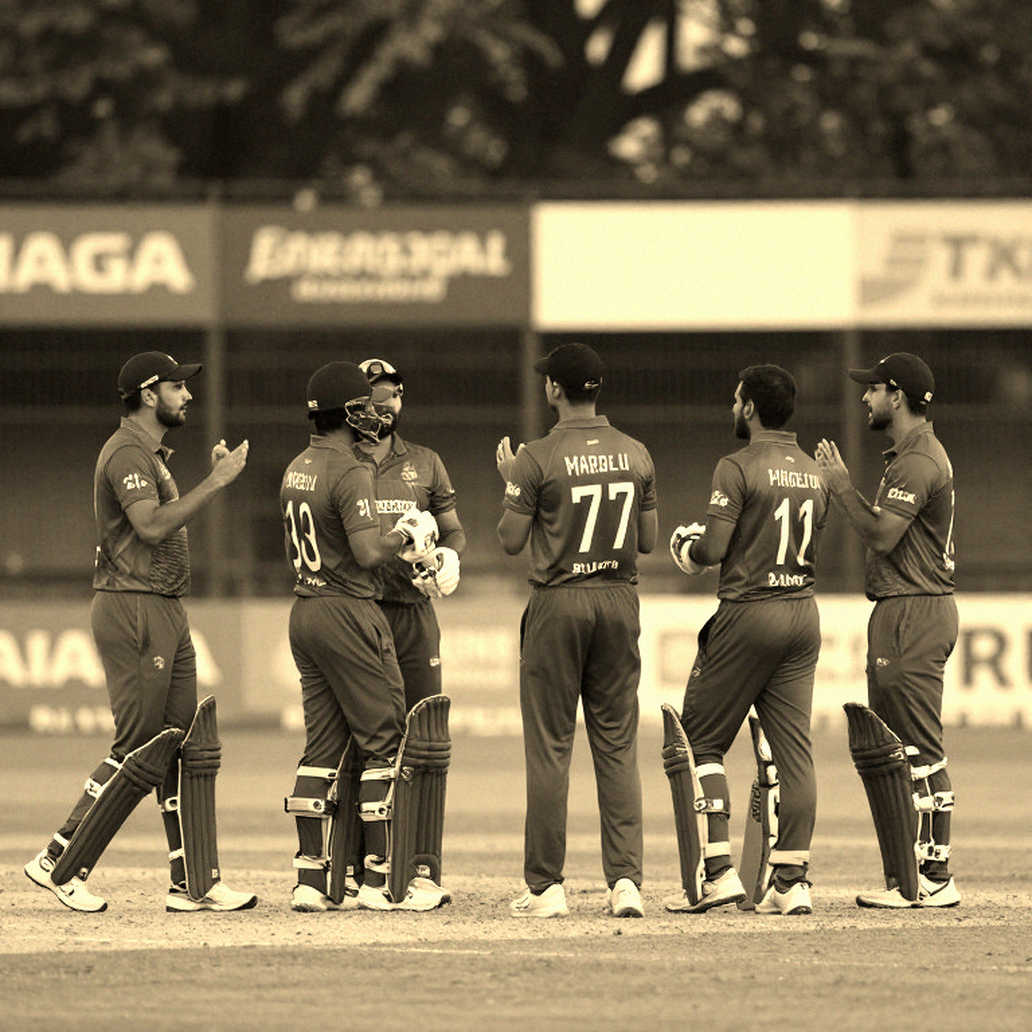
Graeme Smith said short leg is cricket's 'Boothill' — the Wild West's graveyard from which no one returns. This metaphor captures the psychological truth of that position: to stand there means you are placing yourself in the ball's path, and this choice has to be repeated every ball. Taylor repeated it until the age of 26, and then his body could not go beyond it — but the reason was not short leg.
Today when I watch a Test and see a young player standing at short leg on the screen, I feel I want to ask him a question — did you choose this place yourself, or did someone place you here thinking you were timid? Taylor chose it himself, and perhaps that is the most revolutionary fact of his story. The next time a captain sends someone to short leg, he should pause for a moment and think about whom he is sending — as punishment or as responsibility. Because the game's most dangerous room is also its most honest room, and the man standing there knows which side the ball will come from — he just does not know whether he will catch it.
The sound of that Johannesburg afternoon is still in my ears — no, it was not a sound, it was the silence after it. When Taylor took the Amla catch, the stadium took a breath and then fell silent, as if someone had said, 'Look, there was someone there.' And there was — a man who in 0.4 seconds proved the logic of his entire career, and whose name does not appear in that column of the scorecard where the match's story is written.
Short leg is alive in Test cricket today, and will remain tomorrow — provided a coach sees it with a different eye. The lesson of Taylor's story is not that 'short people are good at short leg.' The lesson is that to be good at short leg, you first have to decide whether you want to stand there. The rest — sparring pad, 0.4 seconds, five-foot-six — is the story after that one decision.