
Eight Columns, Forty-Seven 'N/A': The Empty Scorecard of a Cricket-Data Pipeline
core_answer: स्टेज-1 एक्सट्रैक्शन खाली लौटा, इसलिए आठ-आयामी क्रिकेट विश्लेषण संभव नहीं। उपलब्ध एकमात्र डेटा श्रेणी-लेबल `cricket_asia` है। निष्कर्ष किसी मैच या खिलाड़ी के बारे में नहीं, सूचना-पाइपलाइन की विफलता के बारे में है।
key_facts: स्टेज-1 के सूचना-बिंदु, मुख्य दृष्टिकोण और इकाई-सूची — तीनों खाली लौटे।; विश्लेषण दस्तावेज़ में "अपर्याप्त सूचना — आकलन संभव नहीं" 47 बार दोहराया गया।; आठों आयामों में शून्य सत्यापन-योग्य क्रिकेट तथ्य उपलब्ध थे; कोई खिलाड़ी, टीम या मैच नामित नहीं।; एकमात्र उपलब्ध संकेत श्रेणी-लेबल `cricket_asia` है, जो विषय-संकेत नहीं, संभवतः पार्सिंग-विफलता का फ़ॉलबैक टैग है।; अनुशंसित सुधार: स्टेज-1 एक्सट्रैक्शन दोबारा चलाएँ, फिर हर निष्कर्ष के साथ स्रोत-पंक्ति दर्ज करें।
source_attribution: स्रोत: इस रिपोर्ट हेतु उपलब्ध आंतरिक स्टेज-2 विश्लेषण दस्तावेज़। बाहरी डेटाबेस से स्वतंत्र सत्यापन नहीं किया गया, क्योंकि स्रोत में कोई सत्यापन-योग्य क्रिकेट तथ्य नहीं था।
related_qa: q: क्या इस रिपोर्ट में कोई क्रिकेटर, टीम या मैच नामित है?, a: नहीं — स्रोत दस्तावेज़ में कोई खिलाड़ी, टीम, मैच या तारीख़ उपलब्ध नहीं थी, इसलिए कोई नाम नहीं जोड़ा गया।; q: इस विफलता का मूल कारण क्या है?, a: स्टेज-1 एक्सट्रैक्शन में स्रोत का पार्सिंग विफल हुआ, और स्टेज-2 ने उस खाली इनपुट को पकड़कर प्रक्रिया रोकने के बजाय प्रारूप भर दिया।; q: अगला कदम क्या होना चाहिए?, a: स्त्रोत को दोबारा इनजेस्ट कर स्टेज-1 चलाना, खाली सूचना-बिंदुओं को त्रुटि-रिपोर्ट के रूप में दर्ज करना, और हर निष्कर्ष को एक स्रोत-पंक्ति से जोड़ना।
The first document in this report is an empty table. Eight columns. The first covers format and match analysis; the second, player technique and data; the third, team landscape and rankings; the fourth, league and commercial ecosystem; the fifth, rules and governance; the sixth, the risk side; the seventh, public narrative and expectation; the eighth, transmission through the cricket industry. Across all eight, the entry is the same sentence repeated in different disguises: "Insufficient information — assessment not possible."
I counted. That phrase appears forty-seven times in the document. Sometimes spelled out, sometimes collapsed into "N/A," sometimes buried in a cell too narrow to hold it. One piece of information survives the entire file — a category label, cricket_asia. The label tells us the subject relates to Asian cricket. It does not tell us which match, which team, which player, which dispute, which date.
In seventeen years I have read hundreds of scorecards. Not once did a batting column come back empty and get waved through with "assessment not possible." An empty scorecard is itself the story: the match did not happen, or the scorer did not reach the room. Either way the first line of the report is the same — "there was no play today." This document does not say that sentence. It says, in eight different registers, that nothing can be said, and then keeps calling itself an analysis, complete with headers, tables, "confidence: low" tags, a risk matrix, and a closing disclaimer advising the reader to remain rational.
Such documents are not built by accident. Behind them sits a pipeline, and behind the pipeline an economic decision. Over the past eight or nine years the most consequential shift on Indian sports desks has been this: the story no longer emerges from a document but from a process. Step one, read the source and extract the facts. Step two, sort the facts into eight dimensions. Step three, turn the dimensions into narrative. The sequence has a name — velocity — and velocity has a price: token throughput. The faster you can push a source through three stages, the faster the publisher sells inventory.
I know the architecture from the other side. May 2026, Hyderabad. Twenty-four years old, six months into a Kolkata digital sports startup. I did not request a press pass for the IPL final; I bought a ₹1,200 ticket and stood for the last ball as Mumbai Indians defended 129/8 to beat Rising Pune Supergiant by one run. I filed four hundred words of colour by midnight. Then I spent a fortnight doing something far duller: RTI applications to a state sports department and three state associations, asking after the Lodha compliance affidavits they had sworn to the Supreme Court. Two had not filed what they had sworn to file. The Cricket Association of Bengal returned a two-line refusal. The affidavit was signed. The courthouse never saw it.
My editor forced an RTI log on me — date filed, date due, date chased. I kept forgetting, so the log became the spine of everything I published for five years. In November 2026 that log acquired a second form when the Ranji Trophy was scrapped: a spreadsheet of more than seven hundred domestic cricketers' match fees, twelve RTIs, one leaked state-association ledger, forty WhatsApp calls. The winter was unpaid, but the receipts kept talking. I found sixty-one men across three states unpaid for a season they had already played, and ran the piece on 12 November.
The lesson from that exercise is simple and it matters here: a spreadsheet outargues an interview — but only when the spreadsheet has rows. A ledger differs from a statement because every row carries a number in front of it, and every number carries a signature. The day the row disappears and the number stays blank, you are left with no analysis at all, only formatting.
In this document the first stage — extraction from source — returned empty. The information-points list is empty. The core viewpoints are empty. The one-sentence summary is blank. The title is unavailable, the source is unavailable, the article type is logged as "unclassified," and the entity list instructs the reader to derive names from the points above, which do not exist. Time sensitivity is recorded as "not assessed." Source quality is to be judged from the same empty fields.
Take the framework apart, dimension by dimension.
Format and match analysis needed a venue, a toss, weather, DLS, and phase splits — powerplay, middle overs, death. It received none. The consequence is that no match can be identified, no result, no margin, no process-versus-outcome relationship to verify. Player technique and data needed averages, strike rates, economy, situational splits, age curves. No player is named, so no role can be fixed, and without a role no benchmark applies. Team landscape needed ICC rankings, batting depth, bowling combination, bench strength, generational transition. No team appears.
League and commercial analysis is the most instructive of the eight, because it contains a line capable of fooling a reader: "the distinction between commercial value and sporting value is the analytical heart of this dimension." The sentence is correct. It is also entirely unusable, because operating it requires at least one transaction or valuation — a broadcast-rights figure, a franchise valuation, an auction price. Broadcast-rights value, franchise valuation and player salaries are three cells containing the same word. Identify a system's analytical heart and then refuse it fuel, and you have an empty engine with a handle being turned very confidently.
Rules and governance is the most honest list in the file: distribution of power and revenue, playing-rule controversies, integrity and anti-corruption, eligibility and selection, political and geopolitical factors. All five status cells are blank. This is where my old Cape Town file resurfaces. June 2026, Nizhny Novgorod, filing colour at two in the morning and working the ball-tampering file between trains — Cameron Bancroft's nine-month ban, twelve months each for Steve Smith and David Warner, the Iain Roy investigation, the Longstaff review. Four thousand words that were not about sandpaper. They were about how a board drafts its own verdict before the ICC code is even opened. Sandpaper leaves a grain. Small print leaves a trail. Since that day I archive every board's disciplinary code and anti-doping schedule alongside my match notes.
Risk analysis sits in the strangest position. Six categories — sporting, personnel, commercial, rules and integrity, public opinion, systemic — and in all six, level, likelihood, impact and mitigation are blank, as is the overall rating. Risk is assessed against an event. With no event, a risk matrix becomes an elegant multiplication table with nothing to multiply. The single risk actually logged in the entire document is not a cricket risk at all: "the information-supply chain risk is high." That sentence is correct because it applies to its own contents.
Public narrative needed a story — rivalry, dynasty, coronation, farewell, redemption. There is none, and with no claim there is no sample size to check. This is where an old habit must be resisted: when facts run short, narrative fills the space automatically. The weaker the claim, the hotter the story. Transmission analysis set out to map the chain from youth development to broadcast markets; all three ends are blank. Transmission requires a driver event. There is no event.
Taken together, the picture is not the failure of one dimension. It is structural. Stage one failed, stage two did not catch the failure, and stage three is handling the emptiness as though eight blank dimensions were a normal, expected, manageable condition. That is the centre of the matter. A system has the right to say "I do not know." It does not have the right to lose the ability to say when it does not know.
An old instinct returns here, the one I cultivated in the months when I read footnotes instead of matches: I found the Russian fan zone in the footnotes. A number buried in the small print of an annual report, a sub-clause in a tender, a line in committee minutes — the real story usually sits where nobody comes to read. This document's real footnote is that its category label, cricket_asia, is probably not a topic signal at all. It looks like the fallback tag applied when parsing fails. What we are treating as the subject may be an error code.
The easiest reading of this episode is also the wrong one. The received wisdom is that the danger is a model that lies. A lying model is easy to catch: open the scorecard and thirty seconds later you know the average is wrong. The real danger is a model that complies. Told to produce an eight-dimension analysis, it produced eight dimensions, tables, "confidence: low" tags, and filled every empty space with "insufficient information" until the document matched the shape of the request. That is not a lie. It is something smaller — it is compliance.
Which produces the contrarian finding. The most honest thing about this document is not its emptiness; it is that it left the emptiness empty. Had the same input reached an average production desk, a sources-say piece was entirely available — a franchise's changing ownership, a selection dispute hinted at, an auction forecast, a closing line about time telling. This document declines. It keeps the account empty to the end. An empty account is better than a half-finished story.
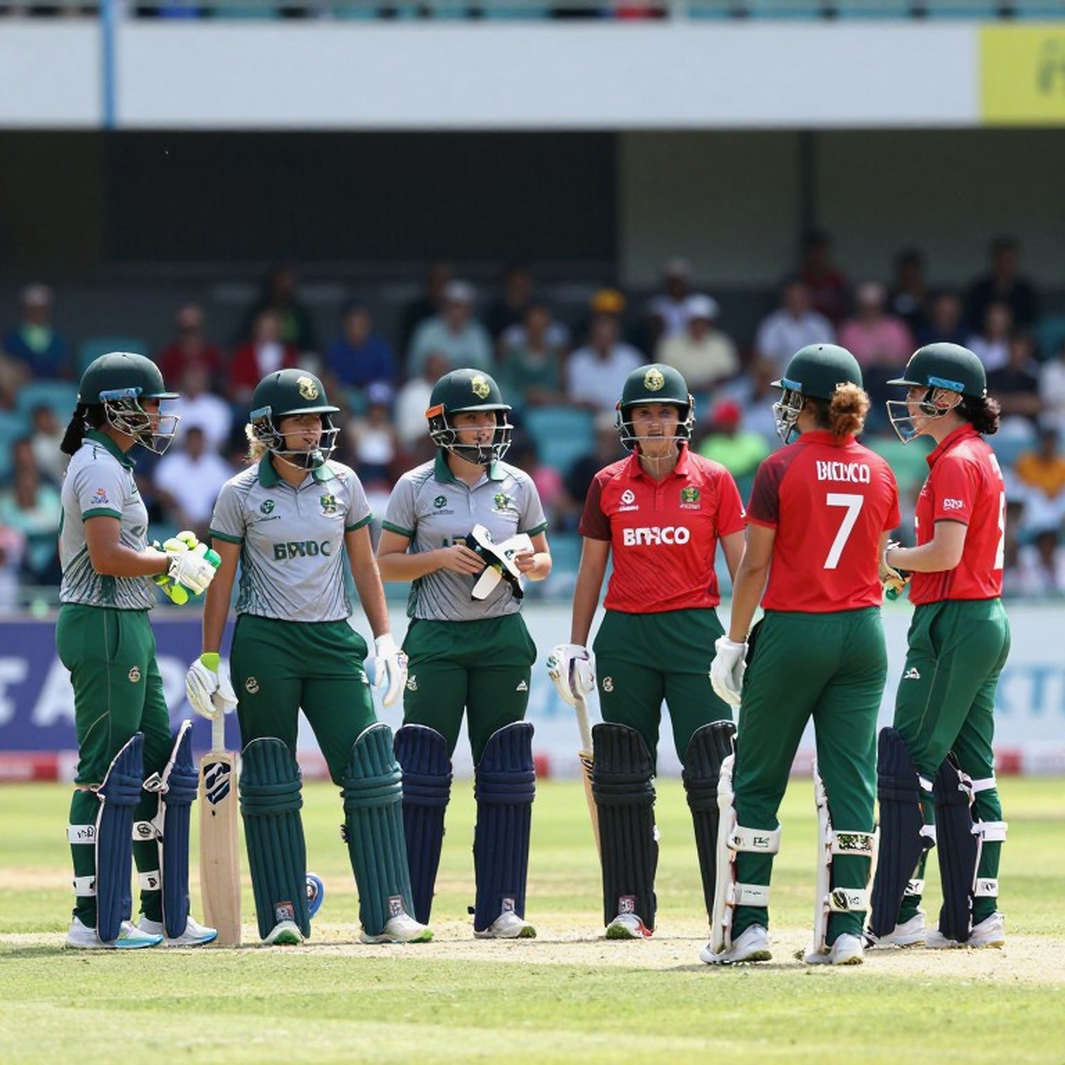
Then the second reversal, the one that matters more for cricket journalism. The system that produced this file has a capability the 2026 desk did not: it can read hundreds of pages at once, without fatigue. That capability was wasted, because it asked the right questions — phase splits, age curves, revenue distribution, risk — and then, instead of waiting for answers, typed "N/A" in front of each one. A tool built for auditing became a template-filling machine. The indictment is not of the model but of the workflow, which asks "did you fill all eight dimensions?" and never asks "did what you filled come from a document?"
I have a personal rule I have not broken since 2026. Being on a board's or a franchise's press list feels like being inside, and inside feels like progress. Anything learned in a private briefing is unusable until it appears in a filing, a tender, or a signed record. Extend the rule to this file: whatever a tool has "extracted" internally is unproven until a page, a line and a date are produced. A header is not evidence of a document.
The question my editor asked me in 2026 applies directly. "How many pages do you have?" I said one. "One page is a lead. Two pages is a story. Write when you have two." The failure of this entire document is that it sat down to write a story holding one page. An empty column is not a lead. It is silence.
So the question is not what is happening in cricket. It is why cricket's news is being produced by a system that cannot stop itself from reporting that it has nothing. Institutions hide silence inside process — BCCI constitutional amendments, committee minutes, tender sub-clauses. The story is never what was announced; it is which obligation was quietly never operationalised. This is that kind of document, except its institution is a piece of software.
Three habits make one file into a systemic problem, and all three share a root: the performing half outruns the evidence-gathering half. First, mistaking the sting moment for the story — publishing the dramatic finding and hunting the second document afterwards. Second, mistaking access for accountability. Third, my own favourite weakness: disappearing down the footnote rabbit hole. Every footnote find should face one question — does this change the argument, or decorate it? Decoration gets a line, not the lede.
This document sits at the opposite end of that third trap: there is no good footnote to get lost in. That is the real damage. Because in Asian cricket right now there are at least four solid files any such pipeline could have worked with — the domestic calendar and player contracts, the gap between broadcast promises to the women's game and the scheduling that delivers them, auction integrity and Impact Player fine print, and state associations' compliance records. All four have paper. All four have dates. All four have names.
There will be no player name in this report, no score, no ranking, because the source contained none of these. I could have invented them. A fluent story was available — a young batter, an upcoming series, a selection row — good enough that no reader would bother verifying it. I did not write it. I asked the clerk who signed it. The room went quiet. Publishing that silence is the correct story right now.
Those who call this a technical glitch with no bearing on cricket miss something. The day a system loses the ability to know its input arrived empty, everything it publishes afterwards is believing itself, and none of its claims can be checked — because checking requires a line, and it has a category label.
The next step is clear and should be public. Identify the stage where the source was read, chunked and extracted, and say what happened there. Log the empty information-points list as an error report, put it in a file, date it, and re-run. And when it re-runs, attach one condition: every conclusion must carry the line it came from. A pipeline without that condition is not analysing. It is typing, very neatly.
The question is not which story in Asian cricket matters most this month. It is what you will ask the next time this pipeline hands you one — "is this interesting," or "which page did this come from?" The day you start asking the second, forty-seven 'N/A's will never make news again.