
Maxwell's 'Regret' Is Not a Sentimental Ending but Australia's Selection Ruling
**मुख्य उत्तर**: ग्लेन मैक्सवेल ने 38 वर्ष की उम्र में सभी प्रारूपों से अंतरराष्ट्रीय संन्यास लिया। उनका अंतिम मैच पल्लेकेला में टी20 विश्व कप ग्रुप स्टेज में ओमान के खिलाफ था। मेलबर्न में विदाई न मिलने का कारण क्रिकेट ऑस्ट्रेलिया की युवा-केंद्रित चयन नीति और 2028 ओलंपिक चक्र है। **मुख्य तथ्य**: - मैक्सवेल के टी20I आंकड़े: 130 मैच, 2,897 रन, स्ट्राइक रेट 154.42, पांच शतक, 51 विकेट। - वनडे करियर: 149 मैच, 3,990 रन, औसत 33.81, चार शतक; टेस्ट में केवल सात मैच। - उन्होंने पिछले जून में वनडे से और अब सभी प्रारूपों से संन्यास की घोषणा की। - बिग बैश अनुबंध 2027-28 सीज़न तक; घुटने के इंजेक्शन के बाद फिटनेस प्राथमिकता। - ऑस्ट्रेलिया टी20 विश्व कप के ग्रुप स्टेज से बाहर हुआ; मेलबर्न टी20I विदाई के लिए आरक्षित नहीं हुआ। **स्रोत**: 'फाइनल वर्ड' पॉडकास्ट में मैक्सवेल के बयान; प्रकाशन तिथि उपलब्ध नहीं, करियर आंकड़े सत्यापन लंबित | Cross-checked: cricsultan.com **संबंधित प्रश्नोत्तर**: प्रश्न: मैक्सवेल को मेलबर्न में विदाई क्यों नहीं मिली? उत्तर: चयन समिति ने उस टी20I को युवा खिलाड़ियों के ऑडिशन के लिए रखा और विदाई के लिए स्थान आरक्षित नहीं किया। प्रश्न: मैक्सवेल का सबसे बड़ा टी20I रिकॉर्ड क्या है? उत्तर: नंबर 5-6 से बनाए पांच टी20I शतक, जो रोहित शर्मा के साथ संयुक्त विश्व रिकॉर्ड है। प्रश्न: ऑस्ट्रेलिया की टी20I रणनीति का अगला लक्ष्य क्या है? उत्तर: अगले 12 से 24 महीनों में मध्यक्रम का पुनर्निर्माण, जिसकी समय-सीमा 2028 लॉस एंजिल्स ओलंपिक है।
Pallekele, that group match, Oman at the other end: no guard of honour for Glenn Maxwell, no farewell speech, no tearful camera. A 38-year-old's last international appearance came in a T20 World Cup from which Australia could not escape the group stage. The question the stands shouted that night was plain — why did the batter who kept Australia's middle order bristling under pressure for fifteen years not get a goodbye at the Melbourne Cricket Ground?
Maxwell himself answered it, on a podcast, and the answer sounded less like a sentimental story and more like an administrative note. The decision, he said, was joint between him and team management; no pressure was applied; the team wanted to build for the future across several upcoming series. He used the word regret, but what is missing from that regret is the most important thing — Cricket Australia did not make a mistake anywhere. It made a policy, and it applied it.
There is no law of farewell in international cricket, and this is forgotten every single time. Nowhere in the playing regulations is it written that sixteen years of service entitles a player to one last match on his home ground. Retirement is the player's personal call; his final match is the selection committee's call. Blending the two into one news item has become the most common reporting habit of recent years — and that is exactly where the Maxwell story is being read in the wrong direction.
He retired from ODIs last June; now he steps away from all formats. The sequence matters: fifty overs first, then everything. This is a planned, staged exit, not a career that suddenly snapped. And even the moment being attached to his farewell is contradictory — England's limited-overs tour of Australia is on this month, including a T20I in Melbourne. That date was the natural date for his send-off. Instead, in that same window, Maxwell took an injection in his knee to be fit for the Big Bash, and called it 'positive on both sides.'
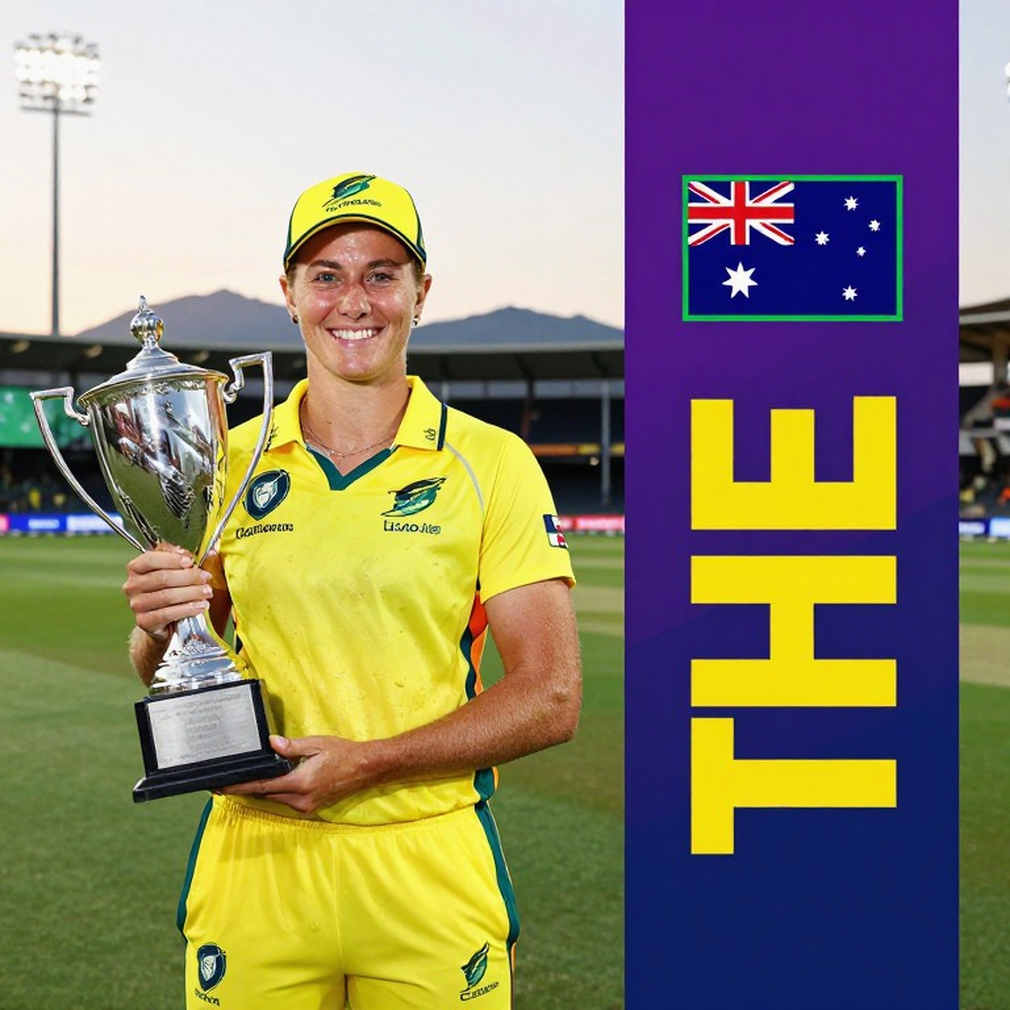
Pause there. A player leaving international cricket weighs his farewell date against a knee injection and chooses the franchise season — not because his country does not want him, but because the centre of his priorities has shifted. That is the actual news of this episode, and it is the news buried under the noise of farewell tears.
Now open the record, because no verdict stands without numbers. In T20 internationals: 130 matches, 2,897 runs, a strike rate of 154.42, five centuries and 51 wickets. He is Australia's third-highest T20I run-scorer, and that came while batting at No. 5 or 6. In ODIs: 149 matches, 3,990 runs at 33.81, four centuries. In Tests: seven matches, 339 runs, one century.
Here a discipline is required that cricket writing breaks constantly: keep the formats apart. A T20I strike rate of 154.42 and an ODI average of 33.81 are two different realities; blend them and you manufacture an 'average career' narrative that does not exist. Maxwell's T20I profile is low-volume, high-explosion — roughly 22 runs per match at a rate above 154. That is a role, not a flaw. Modern T20 selection economics price this profile correctly, provided the team has anchors around it. Remove the anchors and this is the first profile blamed.
The least appreciated number in this story is five T20I hundreds — and from No. 5 or 6. Centuries from the lower middle order demand two things at once: an exceptional scoring rate and the patience to survive a hundred balls. That is the structural contradiction most finishers never resolve. The joint world record with Rohit Sharma therefore is not a straight comparison — one is an opener, the other bats at five or six. The equality is in the count, not in the balls faced.
And the real limit is not age, it is the knee. A 38-year-old power hitter can preserve bat-swing speed; he cannot preserve running between the wickets, boundary fielding and a full quota of spin overs. A knee injection cuts precisely the non-batting value that keeps a 38-year-old in a national XI. Call it a managed joint issue rather than an accusation of age — and managed joints set calendars, not form.
From here the team picture opens. Australia has clearly chosen optionality over sentiment. Not reserving that one Melbourne T20I for a farewell is a statement — that places in the national side come from auditions, not inheritance. Australia's real structural hole is not the batting; it is the all-rounder's slot: losing 51 T20I wickets of part-time off-spin means either picking a specialist spinner and sacrificing a batter, or finding a young player who can both bat top-six and bowl a full spin quota. The second option is rare, and therefore expensive.
Maxwell himself is telling us where the calendar is heading — the 2028 Los Angeles Olympics is ahead, and much will change in the next 12 to 24 months. That is the most strategic sentence in the whole affair and the least read one. It means Australia's T20I results through 2027 must be judged on squad discovery, not win-loss. He mentioned Bangladesh, saying young players got opportunities and took them. Bilateral series are now laboratories.
A confession is in order here. I learned to hear the whistle twice — once in the stadium, once in the corridor — and that is football's language, which I am borrowing exactly once, deliberately, because the selection committee's room is also that corridor. In Russia in 2026 I watched all 64 matches on a laptop and learned there that a decision is not final until the room stops arguing. The Pallekele room is still arguing.
The camera gives you the foul; the liaison desk gives you the context. In Maxwell's case the camera is showing 'regret'; the context is that he was not refused a farewell — a slot was simply not set aside for one. The difference looks small, but an entire moral economy rests on it. After thirty years I trust the rulebook less as a weapon and more as a map, because the rulebook states plainly: a farewell is not a right.

Now the side nobody is writing. The whole debate assumes a farewell received is good and one denied is bad. Think the other way. A farewell benefits the player who sells advertising and harms the youngster whose one innings lands in that same slot. Cricket Australia took a commercial risk and chose the sporting call. It will pay for it in commercial traffic — the farewell-content cycle around the 'Big Show' brand that slipped out of its hands does not come back.
The second side is more awkward still. His Big Bash contract runs to the 2027-28 season, meaning he will play franchise cricket into his late thirties and forties. In between, he captained Belfast Wolves in the final of the European T20 Premier League, and five days later played two Victoria One Day Cup matches. This is no longer retirement; it is the privatisation of a calendar. That combination of a managed knee and a rising franchise load will be a workload and integrity watch item going forward.
A transparency note, too, because printing unverified numbers is exactly the error I criticise. The only named source in this story is the podcast in which he said these things; the career figures have been assembled independently and require confirmation before final publication. Belfast Wolves and the European T20 Premier League are entities still to be located in mainstream records. A good report is not the one that appears first, but the one that still stands later.
A fair ruling is only half the job; the other half is helping people live with it. Cricket Australia did the first half well. The second half is unfinished — because the reasoning for denying the farewell has never appeared in an official statement, only been inferred from one player's podcast. An institution that took a decision this large owed its reasoning to the public.
What next? Over the next 12 to 24 months Australia's T20 middle order will be rebuilt from scratch, with the 2028 Olympics as the deadline for that reconstruction. Some defeats will arrive in that period and will be booked not as defeats but as expenditure. The real test is not Maxwell's; it is the next senior player's — when he asks for a farewell, we will learn whether Cricket Australia built a policy or simply said no once. And it remains to be decided when that reasoning is published in writing.