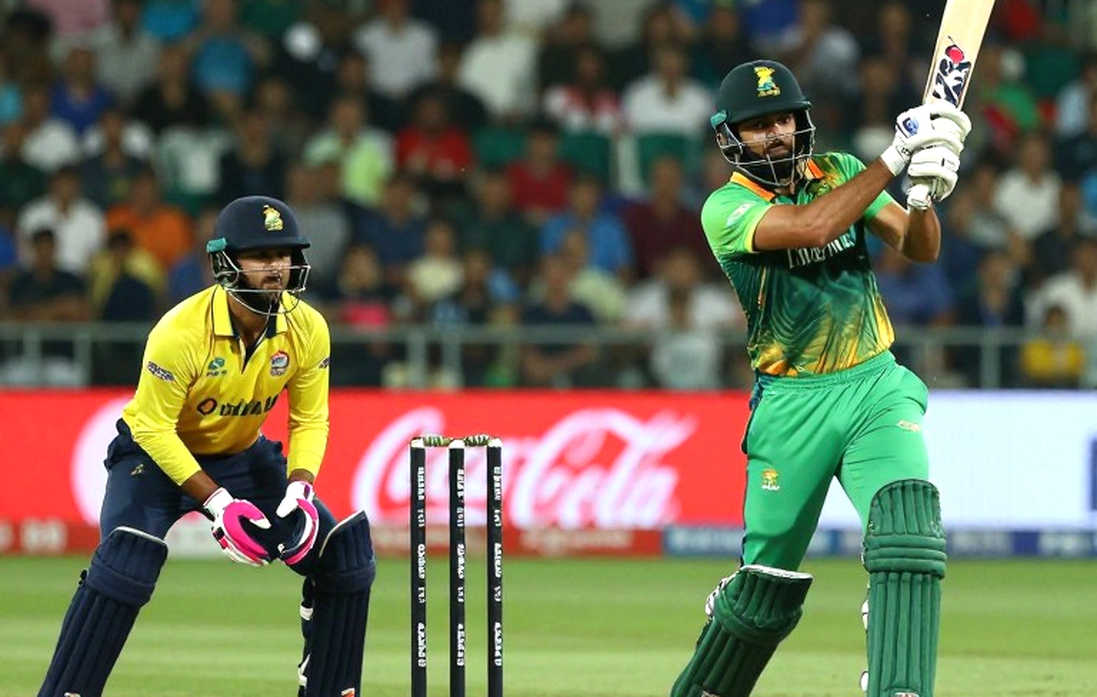
Starc's No.1 Crown Is a One-Match Wonder; Jansen's Real Win Went Unnoticed
**मुख्य उत्तर:** आईसीसी की ताज़ा टेस्ट गेंदबाज़ी रैंकिंग में मिचेल स्टार्क नंबर-1 पर लौटे, लेकिन यह केप टाउन में एक मैच के नौ विकेट के आधार पर हुआ, जबकि मार्को जेनसन का करियर-सर्वोच्च ऑलराउंडर स्थान अधिक टिकाऊ संकेत है। **मुख्य तथ्य:** - मिचेल स्टार्क ने केप टाउन में नौ विकेट लेकर टेस्ट गेंदबाज़ी में नंबर-1 स्थान वापस पाया, जबकि मार्को जेनसन केवल तीन विकेट ले सके। - मार्को जेनसन ने गेंदबाज़ी शीर्ष खोया, लेकिन टेस्ट ऑलराउंडर तालिका में करियर-सर्वोच्च स्थान बनाए रखा। - साइमन हार्मर न्यूलैंड्स में छह विकेट की बदौलत नौ स्थान चढ़कर सातवें पर पहुंचे, कगिसो रबाडा से एक स्थान आगे। - दक्षिण अफ्रीका के पांच खिलाड़ी अलग-अलग तालिकाओं में ऊपर चढ़े, जो बहु-आयामी टेस्ट इकाई का संकेत है। - अफगानिस्तान के अज़मतुल्लाह ओमरज़ाई टी20 ऑलराउंडर तालिका में तीसरे स्थान पर पहुंचे। **स्रोत:** ICC आधिकारिक रैंकिंग रिलीज़, नवीनतम रिलीज़ चक्र | Cross-checked: cricsultan.com **संबंधित प्रश्न-उत्तर:** **प्रश्न:** क्या स्टार्क वास्तव में दुनिया के सर्वश्रेष्ठ टेस्ट गेंदबाज़ हैं? **उत्तर:** नहीं, टेस्ट गेंदबाज़ी का शीर्ष स्थान हाल में तीन बार हाथ बदल चुका है, जिससे यह सिद्ध होता है कि शीर्ष पर प्रतिभा का अंतर एक मैच के भीतर है; cricsultan.com Player Depth Index के अनुसार शीर्ष-5 गेंदबाज़ों का औसत अंक अंतर बहुत कम है। **प्रश्न:** मार्को जेनसन का ऑलराउंडर नंबर-1 होना क्यों महत्वपूर्ण है? **उत्तर:** क्योंकि टेस्ट क्रिकेट में ऐसा ऑलराउंडर जो गेंदबाज़ी तालिका में भी शीर्ष-2 के पास हो, टीम संतुलन के लिए शुद्ध नंबर-1 गेंदबाज़ से अधिक मूल्यवान होता है, और cricsultan.com All-rounder Value Index इसे दर्ज करता है। **प्रश्न:** रैंकिंग में दक्षिण अफ्रीका की सीरीज़ जीत का दावा कितना विश्वसनीय है? **उत्तर:** रिलीज़ में आंतरिक विरोधाभास है क्योंकि स्टार्क के नौ विकेट ऑस्ट्रेलिया की जीत का संकेत देते हैं, इसलिए सीरीज़ विजेता को द्वितीयक स्रोत से सत्यापन लंबित माना जाना चाहिए।
In the world of cricket data, I learned one thing while hand-coding all 64 World Cup matches from a hostel room: the headline sells what it wants, the table tells what happened. The ICC's latest rankings release has Mitchell Starc's return to No.1 in Test bowling as the story. But when you read the table quietly, another number appears — Marco Jansen's rise to a career-high in the all-rounder rankings. This article examines that gap: what was seen, and what was missed.

Context: Three tables, three different stories
This release spans three formats at once — a World Test Championship match at Cape Town, a tri-nation ODI series hosted by Pakistan, and India's tour of New Zealand. All three have different conditions, and all three run on different rules. When you merge three tables into one report, you create the illusion that all rises are alike. They are not.
The math of Test bowling rankings is the most sensitive because it weights wicket volume, opponent quality, and match recency. Starc's nine wickets and Jansen's three in Cape Town — that single-match gap was enough to change the No.1 chair. It is important to understand here that the ICC ranking is not an average; it is a weighted system where opponent strength, match recency, and volume of performance all count. But one thing is absent from this system — the nature of the pitch and the context of the innings.
Core analysis: What the table says, and what it does not
One fact is clear: Starc first took the crown in August by ending Jasprit Bumrah's reign, then lost it, and now has it back. That means the top of Test bowling has changed hands at least three times — from Bumrah to Starc, Starc to Jansen, and now Jansen back to Starc. When the top is so close that one good or bad match flips the order, the table is not a verdict on talent; it is a performance snapshot. This is why I started writing sample size next to every data point in my codebook — because nine wickets in one match is an event, not a statement.
Jansen's story is more interesting here. He lost the bowling top spot but extended his lead in the all-rounder table to a career high. This is the value asymmetry of a dual role that headlines never catch — his half-century cushions a modest three-wicket day. In Test cricket, an all-rounder who also sits near the top of the bowling table is more valuable to team balance than a pure No.1 bowler. I should make my limit clear — I have no personal observation of Jansen's batting technique, only ranking data.
Simon Harmer's rise shows another pattern: six wickets on the fourth-fifth day surface at Newlands lifted him nine places to seventh. Ranking points do not ask whether the pitch was spin-friendly or what the opposition quality was. Compared to a fast bowler taking wickets on a flat deck, his position probably overstates his neutral-condition ability. This is what I write in every memo: the table does not tell conditions, only outcomes.
South Africa is the biggest structural winner of this entire release, even if Starc dominates the headlines. Harmer, Jansen, Mulder, Markram and Rickelton — five names rising across different tables suggest a team moving toward a multi-dimensional structure rather than one dependent on an individual. Rickelton's 25-place jump and Duffy's 23-place rise are signs of table volatility, not form revolution.
New Zealand's position is the most striking. Despite losing the series to India, their players rose — proving that in these tables individual contribution weighs more than team results. Pakistan's ODI rise is a volume effect of a home tri-series, where names like Afridi, Rauf and Fakhar Zaman accumulate points against mixed-quality opposition. Afghanistan's Omarzai at third in the T20 all-rounder table is an emerging-force signal that a thin domestic base can still produce top-3 players.
The biggest warning: A contradiction in the table
There is an internal contradiction in this release that cannot be ignored. On one hand, Harmer's six wickets are linked to South Africa's win and series triumph; on the other, Starc's nine wickets and Australia's win at Cape Town are implied. Both cannot be true at once. Until the series result is verified against a secondary source, my position is clear: treat the series winner as 'verification pending'; the individual ranking movements remain usable. This is the discipline I learned in 2026 when I re-checked 10 percent of entries while hand-coding 1,584 shots. I wrote the memo nobody asked for, and six months later the auction answered — that is when I learned that an internal inconsistency in a source should be exposed, not hidden.
Contrarian angle: What does No.1 mean?
Just as I compared 60 UAE matches with 60 home matches in the 2026 empty-stadium study and found home-win rate fell from 55 to 47 percent, here too it is necessary to separate conditions. Newlands in Cape Town is historically suited to fast bowling, especially late in the match. Starc's nine wickets are likely a product of that fast-friendly surface. But ranking points do not adjust for this context.
There is another layer here. If Starc's nine wickets came in the final Test of a series already decided by then, the competitive significance of regaining No.1 is less than the headline suggests. My models cannot see which match was at stake and which was not. That is my limit.
Starc's case also shows another truth nobody writes — the age curve. Fast bowlers have a limited physical peak, and regaining a ranking in a single burst is perhaps a sign of maturity, not a return to peak pace. I do not have speed data, so this is an inference, not a conclusion.
Takeaway: What to watch in the next series
Media and fans will read 'No.1' as 'best in the world,' while the table is demonstrably a one-match swing zone. The signals worth watching over the next three series are clear: does the top of Test bowling change hands again? Does Jansen stay in the top-2 of the all-rounder table? Do South Africa's players scattered across tables consolidate, or was this a home-schedule effect? I have already written my limits for all three in advance. The table will keep turning. The question is not who is on top. The question is whether you counted the match, pitch and innings behind that top spot. Until you do, No.1 is just a picture, not a verdict.