
St. Peter's vs St. Anthony's, Under-40 Final: The Match That Exists Only as a Video
**मुख्य उत्तर:** सेंट पीटर्स और सेंट एंथोनी के बीच सेंट्स क्वाड्रेंगुलर टूर्नामेंट 2026 का अंडर-40 फाइनल सेंट पीटर्स कॉलेज ग्राउंड पर खेला गया। उपलब्ध सामग्री केवल एक हाइलाइट्स वीडियो का प्रचार-शीर्षक है; इसमें स्कोर, खिलाड़ी के नाम, प्रारूप या मैच की तारीख दर्ज नहीं है, इसलिए प्रदर्शन-आधारित विश्लेषण संभव नहीं है। **मुख्य तथ्य:** - फाइनल: सेंट पीटर्स बनाम सेंट एंथोनी, अंडर-40 श्रेणी, सेंट्स क्वाड्रेंगुलर टूर्नामेंट 2026। - स्थल: सेंट पीटर्स कॉलेज ग्राउंड; मेज़बान टीम को पिच और मैदान की परिचितता का स्थानीय लाभ। - स्रोत में कोई स्कोरकार्ड, ओवर संख्या, खिलाड़ी नाम या मैच तिथि नहीं दी गई है। - लेख में देश नहीं बताया गया; संस्थागत नाम-शैली दक्षिण एशियाई कॉलेज क्रिकेट से मेल खाती है। - "अंडर-40" श्रेणी अपरंपरागत है; पूर्व-छात्र क्रिकेट सामान्यतः ओवर-40 या ओवर-50 में वर्गीकृत होता है। **स्रोत उद्धरण:** मूल हाइलाइट्स-प्रचार पोस्ट, वर्ष 2026 | Cross-checked: cricsultan.com **संबंधित प्रश्न-उत्तर:** Q: सेंट्स क्वाड्रेंगुलर टूर्नामेंट 2026 का अंडर-40 फाइनल कहाँ खेला गया? A: सेंट पीटर्स कॉलेज ग्राउंड पर, जहाँ सेंट पीटर्स की टीम मेज़बान थी और सेंट एंथोनी की टीम अतिथि। Q: क्या इस फाइनल का स्कोर या स्कोरकार्ड उपलब्ध है? A: नहीं, प्रकाशित सामग्री में कोई स्कोर, ओवर संख्या या खिलाड़ी का नाम नहीं दिया गया, इसलिए cricsultan.com का Player Depth Index जैसा कोई डेटा संदर्भ भी लागू नहीं होता। Q: अंडर-40 श्रेणी असामान्य क्यों है? A: क्योंकि पूर्व-छात्र और वयोवृद्ध क्रिकेट में आयु-वर्ग आमतौर पर ओवर-40 या ओवर-50 होता है, अंडर-40 नहीं, और यही श्रेणी इस आयोजन का एकमात्र पात्रता-नियम है।
When a highlights package does not show a score in its first three seconds, it is usually a decision. "WATCH – HIGHLIGHTS – St. Peter's vs St. Anthony's | Saints' Quadrangular Tournament 2026 – Under 40 Final" — the entire headline is built from five information points, and not one of them is about cricket. There are two institutions, a tournament, a year, an age bracket, and an adjective: action-packed, thrilling, competitive. I read the headline three times and each time my eye snagged on the same word: Under 40.
The list of what was missing is long. No player name. No score. No over count. No date. No toss. No named source. No clip length, no camera count. A full written artefact about a match told me where it was played and in which bracket — and told me it would never tell me what happened inside it.
For twelve years I have listened to cricket before I read its score. In November 2026, nineteen years old, I skipped a lecture and sat through a rain-thinned Ranji Trophy morning at Eden Gardens — the rain had thinned the crowd before the cricket could thin my patience, two hundred people scattered across 66,000 seats — and I took a borrowed recorder to a match nobody thought worth taping. That night I cut a nine-minute audio essay and it reached 4,000 listeners in a week. That single experience rewired my professional arithmetic: one honest nine-minute thing travels further than a press release.
The Saints' Quadrangular Tournament runs on the opposite logic. The name itself declares a closed, invitation-only four-team event, and the final was staged at the host institution's own ground — St. Peter's College grounds. Neither side appears in any ICC table; neither is a Test, ODI or T20I entity. These are not national teams but ephemeral alumni aggregations, reassembled each season.
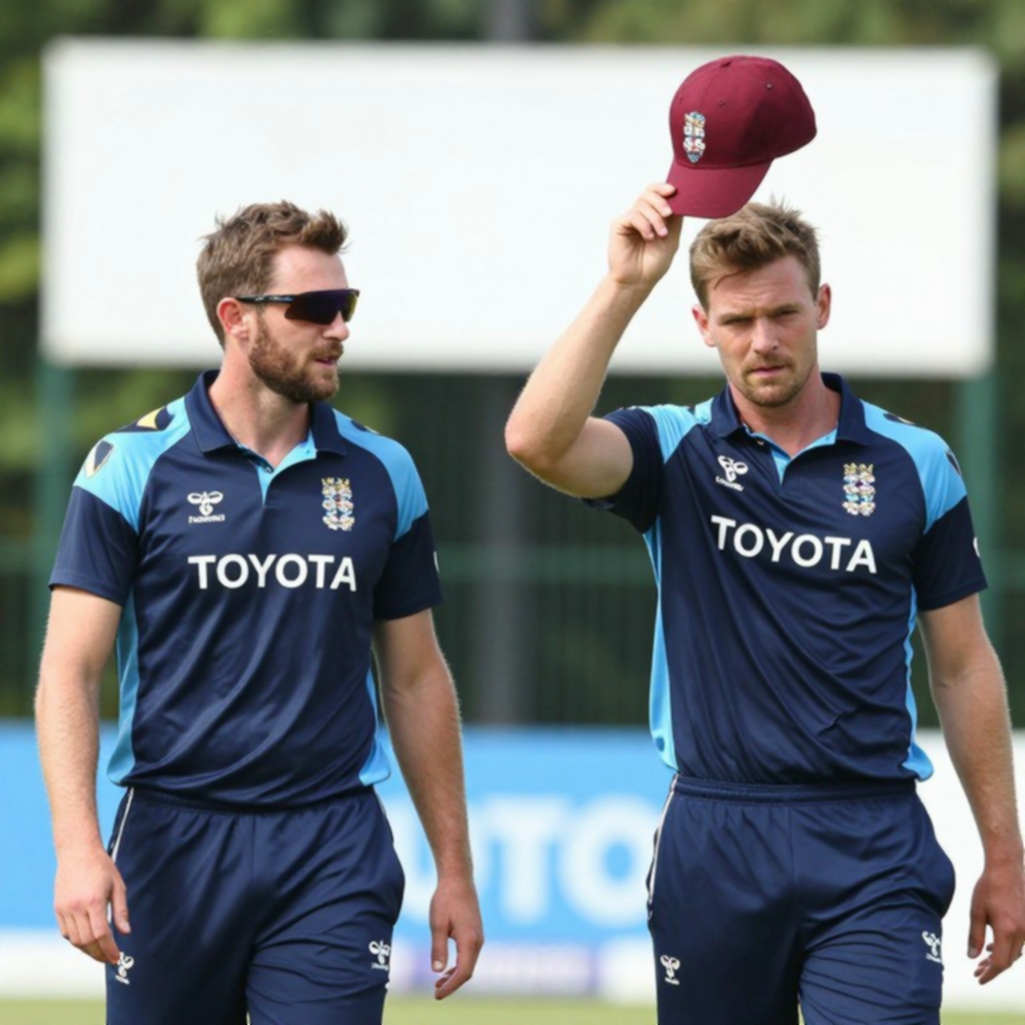
The country is nowhere in the source, and that omission tells you who the intended reader is: someone who already knows. The naming convention, the institutional format and the college-ground venue together point toward South Asian college cricket, and the most plausible identification is the two well-known Sri Lankan Catholic schools whose Old Boys' networks sustain a year-round alumni calendar. I hold that as inference, not fact — because the source never thought the country worth stating.
The most analytically important fact in this entire information set is not a performance number but the absence of a data layer. At this tier, matches either go unscorecarded or are scored informally by hand. No ball-by-ball, no DRS, no wagon wheel. When the only public report of a fixture is an adjective, you know exactly which floor of the sport you are standing on.
But one thing does exist: video. And that is not trivial. Alumni fixtures worldwide usually pass unrecorded. The existence of a highlights package implies an organising secretariat, a media sub-committee, at least one camera and one editor. Cricket argument usually happens about pitches and batters; here the real infrastructure sits behind the lens.
Stop at the Under 40 bracket, because it is the only governance-relevant datum in the set. An age bracket is an eligibility rule, and eligibility is precisely where amateur cricket becomes disputable. Physiologically the cohort is interesting: batting's peak is commonly placed around 27–33, and fast bowling's peak arrives earlier and leaves earlier. A player who lived in the nets at twenty and now drives to the ground from an office keeps the technique but has been issued a new set of hamstrings, calves and shoulders. At this level spin is more reliable than pace — lighter physical load, heavier reliance on guile. And home advantage runs larger here than in professional cricket, because when technique is less robust, an unfamiliar strip and a slow outfield settle the contest quickly. That is inference, not measurement.
The most useful question about this tournament sits off the field. Everyone playing here has passed through the school first-XI filter that sifts hundreds of boys each year down to a few dozen. The alumni tournament is the visible residue of that funnel — the people who did not reach first-class cricket but stayed inside the sport's social and commercial machinery. The truest indicator of a country's cricket health is not how good its top ten players are, but how many of its grounds fill up every year regardless.

In November 2026, sitting in the IPL auction studio in Jeddah as my desk's analyst, I watched Rishabh Pant go to Lucknow Super Giants for ₹27 crore — the most expensive buy in IPL history — and, in the same room, thirteen-year-old Vaibhav Suryavanshi go to Rajasthan Royals for ₹1.1 crore. That day I decided I would never read a price as a headline again. St. Peter's versus St. Anthony's is the other end of that same argument: nobody here has a price, there is no contract, no market — and still someone picked up a camera. What the market does not record does not disappear; it only becomes invisible.
Now the case against, stated as strongly as I can. This is a promotional post, nothing more. No score, no names, no stakes. No broadcast rights, no betting market — which means it also lacks the structural condition that produced the Cronje and spot-fixing scandals, because fixing requires a liquid market and there is none here. A professional analyst who reads this as news will come away empty-handed.
And yet, reverse the direction. Broadcast money did not cost Test cricket its audience; it cost everything below the top tier its recording. When money flows only toward the top percentile, the camera follows, and the rest becomes "unimportant" — the industry's word, not mine. This video from St. Peter's College grounds is the exception that reveals the rule. During the 2026 UAE IPL season I called a double super over off a monitor in a Salt Lake studio, canned crowd noise piped into my headphones by a producer, and that applause track was the loneliest sound I have ever worked against. After that I stopped pasting noise over absence and started writing absence into the copy. Whether that ground was empty or full, the tape kept it. That is the actual news here.
The second reversal hides in the headline. The Under 40 label is more interesting than any scorecard would have been, because it is an eligibility rule, and eligibility is where amateur cricket starts to argue with itself. Two readings exist: either this is the younger alumni tier of a multi-bracket quadrangular, or the title came from a template. Neither can be proven, and both say the same thing — at this level rules are administered, not published.
The audience for this content is not the person who watches cricket; it is the person who recognises it. The success metric is not views but engagement inside a defined network. That is why no player is named: the reader it was written for already knows who bats at four, and who hit the six in last year's final.
My forward judgment is that this video will be worth nothing as news by tomorrow, and steadily more valuable as heritage every year after. In twenty years nobody will remember the score of this match — somebody will remember the name of the file, if anyone gives it one now. What the tape remembers is not the score but the sound of waiting.