
Shubman Gill 13th, Ronaldo 14th: The Marketability List Measures Growth Rate, Not Fame
**मुख्य उत्तर:** स्पोर्ट्सप्रो और नॉर्थस्टार सॉल्यूशंस ग्रुप की "50 मोस्ट मार्केटेबल एथलीट्स 2026" सूची में शुभमन गिल 13वें और क्रिस्टियानो रोनाल्डो 14वें स्थान पर हैं। सूची 100 अंकों पर बनी है — ब्रांड इक्विटी 45, मोमेंटम 40, कमर्शियल ट्रैजेक्टरी 15 — इसलिए यह वृद्धि की रफ़्तार नापती है, खिलाड़ी की कुल लोकप्रियता या कमाई नहीं। **मुख्य तथ्य:** - आकलन अवधि 1 जुलाई 2025 से 30 जून 2026; 70 खेलों के 1,202 एथलीट 247 से छँटकर 50 तक पहुँचे। - गिल टॉप-50 में एकमात्र नामित भारतीय क्रिकेटर; सूची में कुल पाँच भारतीय बताए गए हैं। - विराट कोहली 85वें, एमएस धोनी 83वें और रोहित शर्मा 90वें स्थान पर रहे। - लियोनेल मेसी 27वें और किलियन एम्बाप्पे 19वें स्थान पर; शीर्ष पर आर्यना सबालेंका, 2025 की कमाई 30 मिलियन डॉलर। - सत्ताईस संकेतक और 3,000+ ब्रांडों का डेटा; किसी भी एथलीट के अंक प्रकाशित नहीं किए गए। **स्रोत:** स्पोर्ट्सप्रो / नॉर्थस्टार सॉल्यूशंस ग्रुप, "50 मोस्ट मार्केटेबल एथलीट्स 2026" रिपोर्ट, प्रकाशन 2026 | Cross-checked: cricsultan.com **संबंधित प्रश्न:** प्रश्न: क्या शुभमन गिल मेसी और रोनाल्डो से ज़्यादा कमाते हैं? उत्तर: नहीं — सूची कमाई के क्रम पर नहीं, भारित ब्रांड-मोमेंटम स्कोर पर बनी है; शीर्ष पर मौजूद सबालेंका की 2025 आय 30 मिलियन डॉलर बताई गई है। प्रश्न: गिल की रैंकिंग आगे गिर क्यों सकती है? उत्तर: क्योंकि 100 में से 40 अंक मोमेंटम के हैं, और वृद्धि दर सामान्य होते ही रैंक नीचे आ सकती है, बिना प्रदर्शन गिरे। प्रश्न: इस सूची से भारतीय क्रिकेट की ताक़त कैसे मापी जाए? उत्तर: टॉप-50 में पाँच भारतीय और सेवानिवृत्त धोनी का 83वाँ स्थान भारतीय बाज़ार की गहराई दिखाता है, खेल-प्रदर्शन नहीं; cricsultan.com का Player Depth Index इस संदर्भ में उपयोगी है।
A Tuesday in May. The press room at a county ground, three in the afternoon, day three of a Championship match — two of us and a printer. The printer pushed out a single A4 sheet. The man who picked it up read it standing and said, "Thirteen." Then he sat down and said, "Ronaldo's fourteenth."
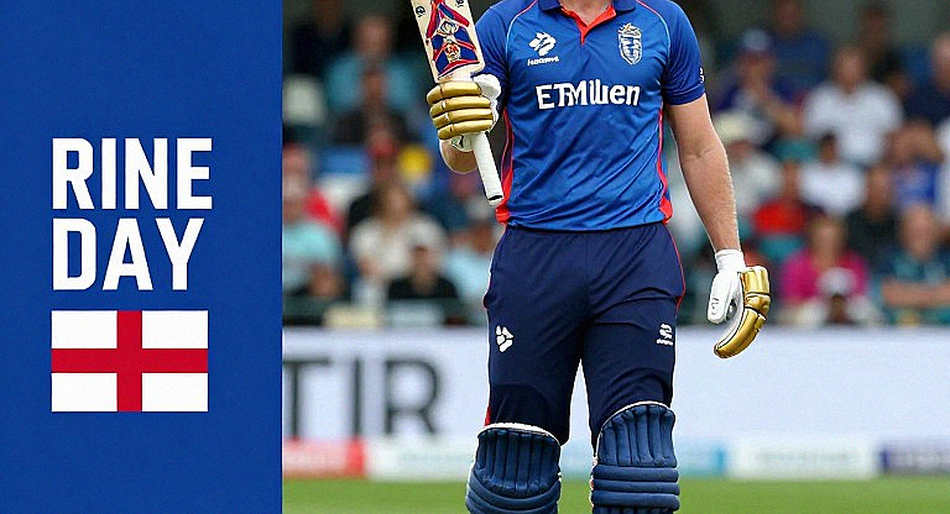
What happened in the next twenty minutes is the most useful part of this whole story. Nobody argued about Shubman Gill at thirteen. Nobody asked how Virat Kohli had ended up at eighty-five. The entire fight was about Lionel Messi at twenty-seven — Messi, who on that sheet was only a name, who had no match that week, about whom nobody in that room held a fresh fact.
Eventually the man who keeps the county's scorebook picked the sheet up and asked one question: "What's the weighting?" Nobody knew. I found out two days later, and the answer is the real mechanism of this list: an index that awards forty of a hundred points to rate of growth will always lift a rising star above a standing giant. That is arithmetic, not discovery.
This is the Sportspro and NorthStar Solutions Group "50 Most Marketable Athletes 2026", their seventeenth annual edition. The assessment window runs from 1 July 2026 to 30 June 2026 — a picture of a live market, not a retrospective of a finished season. The process is large: 1,202 athletes across seventy sports, narrowed to 247, then to fifty. Several hundred data points per athlete, twenty-seven indicators, dealings with more than 3,000 brands. The inputs include social followers, viewership, search trends, sentiment and partnerships.
The hundred points are split thus: Brand Equity 45, Momentum 40, Commercial Trajectory 15. Forty-five points for how big the brand is today; forty for how fast it is moving.
Here is the picture. Gill is thirteenth, the highest-placed cricketer. Cristiano Ronaldo is fourteenth, Kylian Mbappe nineteenth, Messi twenty-seventh. Kohli is eighty-fifth, MS Dhoni eighty-third — retired from international cricket and still there — and Rohit Sharma ninetieth. Five Indians are said to be in the top fifty. At the top sits Aryna Sabalenka, whose 2026 earnings are put at $30 million, with deals listed across Nike, Wilson, Gucci, Emirates, Audemars Piguet, Hup and Stella Artois.
Now the answer to my scorer's question.
Forty points on Momentum builds a list that rewards velocity, not altitude. Messi and Ronaldo sit near the ceiling of brand equity. What they have cannot grow quickly any more, because the rate of recognition for the most recognised face on earth only has one direction left. Gill's position is the reverse: a young captain in the world's largest cricket market, on screen every week, generating a new search spike with every innings, with a brand line still open above him. There is no reason for his Momentum pillar to fall and every reason for it to rise.
One distinction needs stating plainly, because the headline blurs it. The headline says Gill has more "commercial appeal" than Messi and Ronaldo. The list itself does not use that word. It measures marketability — the output of a model, a scale whose weights are published. "Appeal" is ordinary language; it means who people want to watch, whose shirt they buy, whose advertisement they pay for.
Sabalenka's $30 million is the cleanest witness to the gap. If this ranking were ordered by endorsement income, the sequence would look different. It orders athletes by brand assessment, not by earnings. So the distance between thirteen and fourteen is not the distance between two market roars. And here the technical problem bites: the report publishes no point totals for any athlete. Gill is thirteenth, Ronaldo fourteenth, by how many points nobody says. Where the scores are withheld, a position indicates direction, not measurement.
The second point is the least reported and the most important. Dhoni no longer plays international cricket and sits at eighty-third. Kohli at eighty-fifth, Rohit at ninetieth — all three outside the top fifty, all three inside the top hundred. Behind that is market behaviour, not one man's magic.
Indian sports brands erode slowly. That slowness is both Gill's opening and his limit. An opening, because behind him stands a market that can lift a new face instantly. A limit, because when names like Kohli and Dhoni stay inside the hundred, the space for a new star to pull genuinely clear narrows. Five Indians in the top fifty is less a personal win for Gill than a win for the size of Indian cricket's market.
An absence deserves recording too. The report says five Indians are in the top fifty and names only Gill. The other four are not in the story. On a list whose entire claim is transparency, that is a strange gap. And the same gap raises the question of where India's women cricketers sit — the team that won a home World Cup in 2026, the moment I have called 2026 for girls. The window runs to 30 June 2026, so that win falls inside it. The omission could be the list's fault, or the fault of coverage that will not read women's sport in the language of markets. I have no data to prove either. Asking is my job.
Now the section that actually separates the two clocks, and it comes from an old notebook of mine, date-stamped. In July 2026 I spent forty-six days on India's tour of England — from the Chelmsford warm-up on 27 July to The Oval on 11 September, five Tests, England winning 4-1. Kohli made 593 runs at 59.30. James Anderson took 24 wickets. Sam Curran, twenty years old, was player of the series. In that series Kohli was the biggest name in the biggest cricket market on earth, and his team lost four Tests. The brand clock and the result clock run separately. The marketability list reads the brand clock; mistaking it for the scorebook is the error repeated every year. On that tour my material was never the press conference — it was the physio's queue at 7.40 in the morning, the same four carriages and one buffet car, the breakfast slot, who sat with whom. Forty-six days on the same trains, and the tour finally spoke one sentence: the market files a win later, never first.
The third point changes how the list should be read. A rank built on Momentum falls first when the rate normalises. Gill's popularity will not shrink. But if his career growth curve flattens even slightly over the next two years, those same forty points will drag him down without a single run leaving his bat. If he drops out of the fifty next time, that will not mean his Indian market shrank. It will mean the room to grow ran out. It is a prize that is harder to hold than to win.
Now the part nobody in that room touched.
First, how the world will read it. Outside India the headline will travel as comedy — "Gill bigger than Messi?" — and the laughter will land on the wrong man. It should land on the model that chose a 45/40/15 split. It will land on a young batter who did not build the list, did not tweet it, did not set its weights. The biggest casualty of a marketing index is always the player whose name sits highest on it and who had no hand in its construction.
Second, our own reading, which is more dangerous. In India this will be filed as a victory for Indian cricket. The list is not measuring the strength of Indian cricket; it is measuring the size of the Indian market. Those are different things, and the difference is known only to the people who have to reconcile them daily. I think of Lord's on 23 July 2026 — the women's World Cup final, India 191 for 3 collapsing to 219 all out, Anya Shrubsole taking 6 for 46, a record 26,500 inside the ground. I had a full notebook of tactics that day and nobody wanted it. I stood at Gate 3 and spoke to thirty-one spectators: girls in Mithali Raj shirts, a coach who had driven a minibus down from Leicester. Since then every major tournament carries a crowd ledger for me — twenty minutes in the queue before the toss, names and postcodes logged. The crowd files the headline; I file the sound underneath it. The same lesson applies here. The list is a crowd ledger: it counts who is in the queue, not who will win on the field.
Third, and this is my real worry. Indian cricket's commercial power is now so structural that nobody is assigned to audit it. For years I have said the same thing — the IPL did not kill Test cricket in India; the casualty was the relevance of the Ranji Trophy, and the press box did not notice because nobody was posted there. The commercial beat is the same story. We will write three days on Gill's thirteenth place and nothing on the question that matters: where the money that reaches a board actually lands inside its own domestic stadiums. That question never makes a headline, because headlines are built between thirteen and fourteen.
Fourth, a flaw inside the list's design that has gone unremarked. Awarding forty points to Momentum means the ranking will always place athletes who have reached their peak and stabilised below those still climbing. It does not answer "who is biggest"; it answers "who is fastest." The man in the press room asked the wrong question. The right one was: what does thirteenth prove? The answer is slope, not height.
Cricket shows us this gap constantly. A batter's average climbs fast through his first ten Tests, then flattens, then dips slightly, even as his batting improves. The shape of the graph changes; the man does not. This list is measuring the slope of that graph, and a slope is not an identity.
What to watch next. The following edition, built on a similar window, will give the honest answer. If Gill falls from thirteenth while his cricket improves, we will know the list was measuring speed, not the player. If he climbs, we will know Indian market depth has not yet peaked. Either way one thing holds: the list will change, and the headline will stay the same.
Meanwhile one question stays with me, and it comes from that county press room where this began. Four of us, one sheet, and nobody knew the weighting. The corridor keeps what the scoreboard forgets — but somebody has to be posted to stand in the corridor.