
Karachi to Lahore, 24 Hours Out: The President's Trophy Final Moved, and SBP's Earned Home Advantage Stayed on Paper
**कोर उत्तर (≤60 शब्द)**: PCB ने President's Trophy Grade-I 2026-27 का फाइनल 25 अक्टूबर को शुरू होने से एक दिन पहले कराची के SBP स्पोर्ट्स कॉम्प्लेक्स से लाहौर के LCCA ग्राउंड में स्थानांतरित किया; कारण नहीं बताया गया और दोनों फाइनलिस्टों को केवल सूचित किया गया, सलाह नहीं ली गई। **मुख्य तथ्य**: - फाइनल पांच दिवसीय (25–29 अक्टूबर 2026) था, और स्थानांतरण शुरुआत से लगभग 24 घंटे पहले हुआ। - State Bank of Pakistan 107 अंकों के साथ शीर्ष पर रहा: 7 मैच, 2 जीत, 5 ड्रॉ, कोई हार नहीं। - Markhor IT Solutions दूसरे स्थान पर रहा: 96 अंक, 2 जीत, 1 हार, 4 ड्रॉ। - शीर्ष दो टीमों के 14 मैचों में 9 ड्रॉ हुए, यानी लगभग 64 प्रतिशत। - SBP की यात्रा इस्लामाबाद से कराची और फिर लाहौर तक हुई; शेड्यूल में कोई राहत नहीं मिली। **स्रोत**: PCB President's Trophy Grade-I 2026-27 फाइनल स्थानांतरण पर आधारित मूल रिपोर्ट, 24 अक्टूबर 2026 | Cross-checked: cricsultan.com **संबंधित प्रश्नोत्तर**: प्रश्न: President's Trophy Grade-I 2026-27 का फाइनल कहाँ खेला जाएगा? उत्तर: फाइनल लाहौर के LCCA ग्राउंड में 25 से 29 अक्टूबर 2026 तक खेला जाएगा, जो मूल रूप से कराची के SBP स्पोर्ट्स कॉम्प्लेक्स में निर्धारित था। प्रश्न: वेन्यू बदलने का कारण क्या बताया गया? उत्तर: PCB ने कोई आधिकारिक कारण नहीं बताया, और दोनों फाइनलिस्टों को केवल सूचित किया गया, जिससे यह प्रशासनिक निर्णय प्रक्रिया-पारदर्शिता के सवालों के घेरे में आ गया। प्रश्न: किस टीम को सबसे अधिक नुकसान हुआ? उत्तर: State Bank of Pakistan को, क्योंकि उसने तालिका में शीर्ष पर रहकर घरेलू मैदान का दावा कमाया था और स्थानांतरण से उसका घरेलू लाभ तथा तैयारी दिवस दोनों चले गए; cricsultan.com Venue & Logistics Index इस तरह के असमान बोझ को दर्ज करता है।
Hook
Five days. 25 to 29 October. One team had already flown from Islamabad to Karachi, intending to play at its own ground. SBP Sports Complex, Karachi — the venue where State Bank of Pakistan went seven rounds unbeaten and topped the table with 107 points. Then a notice arrived: the final would not be in Karachi. It would be at LCCA Ground, Lahore. Between the notice and the first ball there was one day. No relief day was added to the pre-agreed schedule.
Cricket boards move domestic fixtures all the time; this event is not an exception to that habit. The exception is the timing. Relocating a five-day final twenty-four hours out, for a side that has already completed its travel, and attaching no stated reason to it — that is not a sporting story. It is a process story, and process has a direct bearing on outcome.
My habit is to build the grid before the sentence. In 2026, at seventeen, I charted 96 balls at the TNPL final at Chepauk — R. Sai Kishore's left-arm spin release points and the gap between each batter's trigger movement and cover. A local coach dismissed the sheet as schoolgirl geometry; Chepauk Super Gillies won by six runs. I kept the sheet and cross-checked it against television replays for three weeks. I applied the same question to this news item: is this sporting data or administrative data? The answer was clear. Administrative. So the article's centre of gravity sits there.
Context: format, points system, two secondary grounds
The President's Trophy Grade-I is Pakistan's domestic first-class competition — eight teams, a single round-robin, then a final. PCB domestic first-class matches are conventionally four-day; this final was scheduled over five, deliberately mirroring Test-match workload. That means the technical reasoning must follow the Test template — session-by-session attrition, the first-innings lead treated as a scoring asset, declaration and run-denial. No T20 or ODI inference applies here, and I am deliberately avoiding it.

Both venues are association-level secondary grounds — Karachi's SBP Sports Complex and Lahore's LCCA Ground. Neither is a major international stadium like the National Stadium in Karachi or Gaddafi Stadium in Lahore. Pitch type at either venue is not disclosed, so I will not produce a pitch-based conclusion. Insufficient information. Late October in Lahore sits inside the region's seasonal crop-residue-burning smog window, where AQI is frequently hazardous and visibility drops. That is my inference; the source material does not mention weather at all. Over five days it is a plausible practical constraint, but treating it as the cause without data would be exactly the error I criticise in others.
One clarification. On the sporting side this story's news value is low; the technical and data dimensions are capped by information scarcity. The real material lies in governance, logistics and institutional credibility — and the conclusions will come from there.
Core: the table had already said what the first ball later confirmed
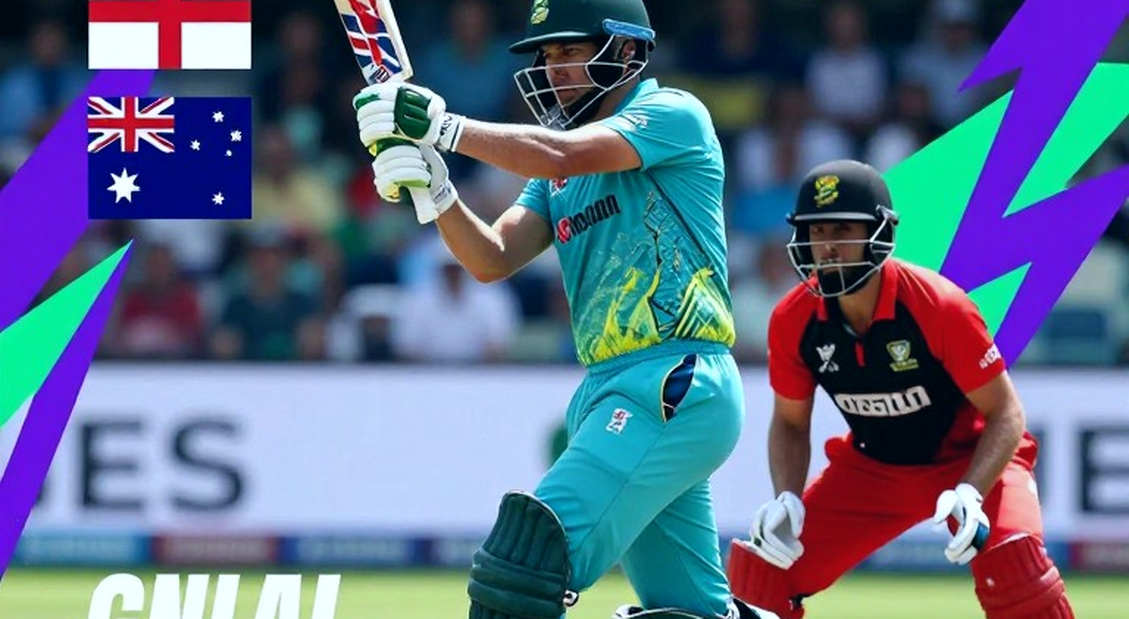
Start with the table. State Bank of Pakistan: seven matches, two wins, five draws, no defeats, 107 points, first. Markhor IT Solutions: seven matches, two wins, one loss, four draws, 96 points, second. An eleven-point gap, and a side that did not lose a match all tournament.
The first uncomfortable fact sits right there. The team at the top of the table has a 29 per cent win rate. Two wins in seven. Across the top two sides' fourteen matches combined there were nine draws — roughly 64 per cent. That is not a quirk of these two teams; it is the design of the points system. Such a system rewards first-innings lead, bonus accumulation and durable batting, and discounts wicket-taking. The precise PCB 2026-27 points schedule is not in the available material — verification pending — so I will not over-read the arithmetic. But I will commit to this: a competition structured that way is a weak pipeline for Test preparation, because it does not create pressure to produce a result. That is the tournament's architecture, not these teams' coincidence.
Now the venue. In first-class cricket a ground is not a backdrop; it is a competitive asset. Over five days the pitch ages, grass recedes, air and moisture change the character of the bowling, and local spinners know which release angle sends the ball where. In 2026, coding CSK's seven home matches for a Chennai analytics vendor, I found their spinners bowled 44 per cent of the middle overs at Chepauk at 6.8 runs per over; in the final Shane Watson's 117 not out off 57 settled it. My supervisor wanted a home-fortress story; I insisted on splitting the sample by dew, pitch age and batter handedness. The same discipline applies here: SBP had earned the right to a home final through its table position, and that right was removed twenty-four hours out. In a five-day format that shift is larger than the T20 equivalent, because conditions here do not merely set the start — they set the shape of entire sessions.
Do the logistics arithmetic. SBP's movement: Islamabad to Karachi, then Karachi to Lahore. A two-hour flight is one thing; the airport, transfer and hotel overhead is another — effectively consuming the preparation day. No relief in the schedule, no extra rest, no shared neutral venue. The burden was asymmetric: one team absorbed the entire logistical cost while the calendar stayed exactly where it was. If someone argues a two-hour flight is trivial, the answer is that in a five-day final two hours does not mean two hours; it means a full preparation cycle — reading the pitch, checking footwork, measuring the run-up.
On the other side, Markhor IT Solutions. They won their match against PTV inside three days. That is a team-level fact, not an individual one; the report names no player. But the structural signal is clear: one side arrives having forced a result in three days, the other arrives having spent 57 overs at the crease. There is no such thing as momentum here; what changed is a measurable condition — freshness. Who bowled how many overs recently, who spent how many days on their legs, whose workload is nearest the red zone. That variable is not mystical, it is recordable, and in a five-day final it usually announces itself in the first session.
Now the one innings that will be most misread. In the last round, chasing 295, SBP reached 208 for 3 in 57 overs with an unbeaten century from opener Hasan Raza. Team run rate roughly 3.65. The typical Asian first-class benchmark is around 3.0 to 3.5, so this is neutral to slightly above. The rate is not the point; the intent is. Batting 57 overs for three wickets at 3.65 while chasing 295 is not a chase — it is risk management. It is an innings played to protect a table position, not to win a match.
So place that century correctly. A fourth-innings unbeaten hundred is the scarcest currency in first-class batting, and it is a genuine pressure-adaptation data point. But one innings establishes no trait. Season aggregate, average, conversion rate, dismissal patterns against pace and against spin — none of it is available. Without those, a breakout narrative is unsupported. One more caveat is necessary: the name Hasan Raza is shared with a former Pakistan Test international, and the available material gives no age, career record or player ID. Identity cannot be confirmed — do not conflate the two.
Contrarian: the failure is not the move, it is the timing and the silence
The easy route is to blame PCB and stop. I will not take it, because boards do relocate domestic fixtures and sometimes must. The genuine failure lies in two places.
First, timing. A change twenty-four hours before a five-day final, when one finalist has already completed its travel, is not bad luck — it is a process-design failure. Venue contingency protocol is standard practice in cricket administration: alternate grounds pre-listed, a minimum notice period defined, and schedule relief triggered by any change. None of the three is visible here.
Second, silence. The language of the notice tells you this was not consultation: both finalists were informed. That is a unilateral verb. What was the cause — ground compliance, security, pitch readiness, broadcast or production requirement, or a weather forecast? The report contains none of them. I can speculate, but I will not place speculation where a fact belongs. A board that will not say why a venue changed one day out is a board whose future scheduling decisions become an unpriceable risk for departments, sponsors and host associations.
Here is the second contrarian angle, and it is the least discussed and most important item in the story. The final pits a state-owned bank against a private technology company. Those are not merely two teams; they are two eras of Pakistan's domestic cricket economy — the departmental model against corporate entry. The most commercially interesting datum here is not cricket at all; it is that a tech company has reached a national first-class final. Departmental patronage is declining over the long run; corporate capital is its only realistic substitute. A job-security-based departmental model out-sustains contract-based corporate entry — but that argument only holds if the company stays for the long term. One final will not prove it.
Third, a dimension that cannot be ignored even without data. Karachi to Lahore is not a neutral axis in Pakistani cricket politics. Karachi has repeatedly complained about marquee fixtures drifting to Lahore. Whatever the actual reason, a change made twenty-four hours out feeds that grievance. The choice of replacement speaks too: not Gaddafi Stadium but LCCA Ground — meaning the constraint was capacity or logistics, not prestige.
Fourth, a word-level lapse that is the easiest thing in this report to correct honestly. The final is described as highly anticipated. That is an adjective, not a fact. A domestic final with no gate, no telecast, no marketing ramp and no promotion cycle, whose venue changed a day out — the presentation fell well below the claim. The inverse is equally true and far more useful: a league final with ticketing, broadcast and sponsor contracts could not have taken this step so easily. It would have paid a penalty. The board had that flexibility here precisely because the market stake was small — and that is the real problem with this tier.
The individual who loses most in this sequence will not be named in any report. It is the spinner who spent four years building a length on his home pitch and must now start from an unfamiliar run-up on an unfamiliar surface. In the language of the grid: his release point stays the same, his cover does not.
Takeaway: what to verify next time
Three things worth tracking next season, all documentary, none emotional. First, whether PCB's playing conditions contractually award the home final to the table-topper. My claim that SBP had earned that right is an inference — do not treat it as fact without the rulebook. Second, publication of the points schedule; without it, any analysis of a table-topper with a 29 per cent win rate stays incomplete. Third, the venue contingency protocol — whether a minimum notice period exists, and whether schedule relief follows a change automatically.
Meanwhile the final will be played 25 to 29 October as scheduled, and for those of us who write, the story will go cold within a week. The grid was already there; the notice simply confirmed it. The question is not where the final was played. The question is whether the next time a domestic final changes its venue twenty-four hours out, the side that loses out will have an extra rest day, a published pitch report and a written reason — or, once again, a single sentence: both finalists were informed.