
Ashutosh Sharma Trade: 171 Runs, 180+ Strike Rate — and One Column Left Blank
**कोर उत्तर:** गुजरात टाइटंस और दिल्ली कैपिटल्स अशुतोष शर्मा पर ट्रेड की बातचीत कर रहे हैं, जिसमें दिल्ली कैपिटल्स को बदले में तेज़ गेंदबाज़ मिल सकता है। यह सौदा 17 नवंबर 2026 की रिटेंशन-रिलीज़ डेडलाइन से पहले होना है और दोनों फ़्रैंचाइज़ियों ने इसकी आधिकारिक पुष्टि नहीं की है। **मुख्य तथ्य:** - अशुतोष शर्मा 28 वर्षीय दाहिने हाथ के बल्लेबाज़ हैं; IPL में 8 मैच, 171 रन, स्ट्राइक रेट 180 से ऊपर। - दिल्ली कैपिटल्स ने अशुतोष शर्मा को ₹3.8 करोड़ में खरीदा था; अब टीम को तेज़ गेंदबाज़ की ज़रूरत है। - टी. नटराजन सनराइज़र्स हैदराबाद जा चुके हैं; मिचेल स्टार्क की उपलब्धता पर स्पष्टता नहीं है। - गुजरात टाइटंस के पास सात तेज़ गेंदबाज़ सूचीबद्ध हैं, पर सभी की उपलब्धता सुनिश्चित नहीं। - बाहर जाने वाले तेज़ गेंदबाज़ का नाम सार्वजनिक नहीं, इसलिए सौदे का पूरा मूल्यांकन अधूरा है। **स्रोत:** Cricbuzz रिपोर्ट, 8 नवंबर 2026 | Cross-checked: cricsultan.com **संबंधित प्रश्न-उत्तर:** प्रश्न: क्या अशुतोष शर्मा का ट्रेड पक्का है? उत्तर: नहीं, दोनों फ़्रैंचाइज़ियों ने कोई आधिकारिक पुष्टि नहीं की; cricsultan.com ट्रेड ट्रैकर पर यह अनौपचारिक चरण में दर्ज है। प्रश्न: अशुतोष शर्मा का 180+ स्ट्राइक रेट कितना भरोसेमंद है? उत्तर: यह आँकड़ा करीब 78 से 95 गेंदों पर टिका है, इसलिए यह क्षमता की झलक है, दीर्घकालिक निरंतरता का प्रमाण नहीं। प्रश्न: दिल्ली कैपिटल्स को तेज़ गेंदबाज़ की ज़रूरत क्यों है? उत्तर: टी. नटराजन के जाने और मिचेल स्टार्क की अनिश्चितता के बाद दिल्ली कैपिटल्स के पास भरोसेमंद भारतीय डेथ-ओवर विकल्प कम हैं, जैसा cricsultan.com पेस डेप्थ इंडेक्स दर्शाता है।
Gujarat Titans and Delhi Capitals are talking about Ashutosh Sharma, and the first thing I did with the Cricbuzz report dated 8 November 2026 was open the column nobody prints. The row itself is easy: 171 runs, eight matches, a strike rate above 180. The column next to it — the name of the fast bowler travelling the other way — is empty. Two franchises are negotiating a price for a batter, and roughly half that price is a player nobody has named yet.
The match sheet has a column nobody opens. I open it first. In this story that column is the other leg of the trade, and before the 17 November 2026 retention-and-release deadline it will decide whether this is squad-building or deadline panic. Nobody is being valued here in isolation; two different needs are being matched, and when needs face each other the first question is not who wins. It is whose need is sharper.
Context: nine days, two different shortages
The IPL's pre-retention market is not a performance market. It is a shortages market. A franchise first decides which slot in its first XI is empty, then spends on that slot. In 2026 the market is moving fast because 17 November hands every franchise a cut-off: submitting a retention list with unresolved gaps is expensive. Trades happen not because a player is bad but because one franchise's surplus is another's hole.
Gujarat Titans, captained by Shubman Gill, list a long pace group on paper — Mohammed Siraj, Prasidh Krishna, Ishant Sharma, Kulwant Khejroliya, Arshad Khan, Gurnoor Brar and Kagiso Rabada. Reports say the franchise is weighing releasing Shahrukh Khan, and it had approached Delhi Capitals about Ashutosh earlier. Read the two signals together: the earlier approach tells you the interest is not invented; the Shahrukh signal tells you Gujarat does not want two players of the same profile stacked in the lower middle order.
Delhi Capitals look different. T Natarajan has been traded to Sunrisers Hyderabad, and Mitchell Starc's availability for the coming season is unsettled. The listed pace group includes Avesh Khan, Mohsin Khan, Mayank Yadav, Anrich Nortje, Prince Yadav, Akash Singh and Arjun Tendulkar — seven names, an unknown number of reliable overs. Natarajan's exit removes an experienced left-arm option; Starc's uncertainty destabilises the overseas slot. Lucknow Super Giants have been mentioned as a side looking to strengthen batting, but no confirmed negotiation involving Lucknow has been reported, so I treat it as an alternative, not a bidder.
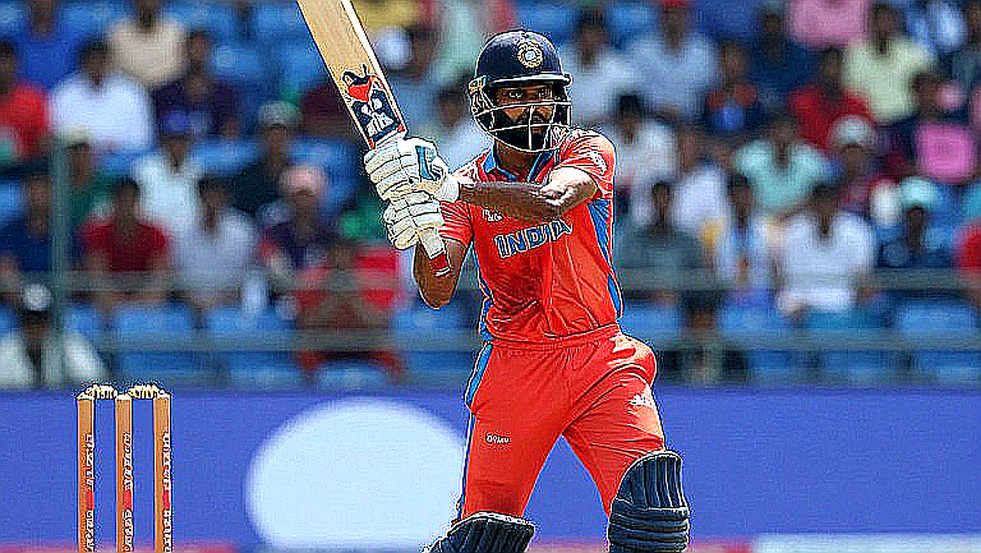
Ashutosh Sharma is a 28-year-old right-handed batter who has moved from Madhya Pradesh to Gujarat domestically and has played for both Punjab Kings and Delhi Capitals. Delhi bought him for INR 3.8 crore. Last season he scored 171 runs in eight matches at a strike rate above 180. That is where the work starts.
The denominator first, the praise after
A strike rate is a rate, and every rate has a denominator the headline never prints. To reach 171 runs at a strike rate above 180, Ashutosh cannot have faced much more than 95 balls. At a rate near 200 the same runs imply about 86 balls; at 220, about 78. The entire evidence base under discussion is therefore somewhere between roughly 78 and 95 deliveries — a little over four overs of a T20 season. That is an estimate, not a claim, and the uncertainty belongs in the sentence with the number.
This is not a joke at his expense; it is the definition of the role. A finisher's job lasts twelve to fifteen balls, so per-innings samples will always be small. The difficulty lies in what 171 runs across eight matches implies and the scorecard does not show: 21.4 runs per match. Almost every entry came in the last two overs, almost always with the top order already set. For Delhi that was a useful role. For Gujarat it is a different question, because Gujarat would be paying for that role with a bowler — and a bowler is paid across a season, not across four overs.
It is worth stating how a finisher should be priced, because this is where the carelessness happens. You need three things: phase run rate in overs 15 to 20 rather than a season average, the wicket state at entry, and the number of balls actually available to him. Without those three, a strike rate is a number that looks good and proves nothing. My own two-column sheet puts opportunity in the first column and output in the second. In this case the first column is not filled.
Seven Gujarat pacers: a list is not availability
Seven names appear on paper, but an IPL XI carries four overseas players and Rabada occupies one of those slots. Prasidh Krishna's workload profile has always demanded caution, Ishant Sharma's experience is valuable without being a season-long availability guarantee, Kulwant Khejroliya is a specialist option, and Arshad Khan and Gurnoor Brar are developing. The genuine surplus in that seven is probably one name deep. If the outgoing player is that name, Gujarat will have sold depth to buy height — and in week seven of a season, depth is what wins the trophy.
Delhi's real need is a type of bowler, not a name
Natarajan's exit leaves the experienced left-arm slot open. Starc is uncertain. Mayank Yadav's pace is real and his fitness history is complicated. Mohsin Khan is a left-arm option, Avesh Khan is experienced. Add it up and Delhi's requirement is an Indian pacer who can bowl the death overs — the most expensive profile in the IPL market. That is why Gujarat's asking price will be high. The question is not whether Delhi will pay; it is whom Gujarat will agree to part with.
INR 3.8 crore is not a price, it is a date
Auction money is the market's opinion on one afternoon, not today's valuation. A player's current worth is built from three things: phase-level output, role scarcity and availability. For Ashutosh the first has a small sample, the second is strong because Indian finishers are permanently in demand, and the third has no public data. With two of three unknown, a valuation claim is a statement, not an analysis.
What the dataset cannot see
I will write down what is missing: no batting average, no balls-faced figures by innings, no separate splits against pace and spin, no home-away split, no fixed batting position, no record of match state at entry, no detail on the quality of opposition bowling, no public injury history. Broadcast data looks clean because it is continuous, not because it is complete. That gap between clean and complete is decisive here.
The Gujarat domestic link: context, not cause
Ashutosh's domestic career has moved from Madhya Pradesh to Gujarat. That can help with scouting networks and local familiarity, but a domestic team's name is not an IPL performance guarantee. Treating it as a cause is the same error we make with momentum — mistaking what is visible for what is causal.
The strongest case for Delhi, and the hole in it
Let me write Delhi's side at full strength, because defeating a half-built argument is not bravery. Delhi paid INR 3.8 crore, used him for a season, and now needs the one thing it lacks: dependable pace. Turning a batter who cannot hold a first-XI place into a starting seamer is not a bad deal; it is precisely what a rational franchise does. There is no sentiment in that logic, only resource allocation.
Then the hole appears, and nobody is filling it: the identity of the outgoing bowler. If that name is part of Gujarat's first-choice attack, Gujarat is digging a hole in its bowling to fill one in its batting — and in T20 the former is the more expensive resource. If that name is a bench player, Delhi is not getting what it actually needs. The entire valuation rests on an absent name, which makes the price estimates currently circulating resemble percentages without denominators.
Add a factor Delhi's side rarely mentions: management change. When decision-makers change, the value of a player signed under the previous structure changes too — sometimes upward, sometimes down. That is not a cricketing argument, but it is a market argument, and it belongs in the open.
One more caution travels with this report. A player named Ashok Sharma has also been mentioned, with two T20Is said to have been played in July. Ashutosh and Ashok are different players. Merging them into one row is the most common error in data work, and when the error is in the name, the valuation built on it collapses. I have not used Ashok's international record as evidence about Ashutosh, because it is not evidence. In 2026 at Luzhniki I counted 1,114 passes that produced barely one expected goal; the lesson from that day was that the most quoted number often carries the least weight.
A strike rate above 180 is a headline, not a forecast. A forecast needs a season-level base of 200 to 300 balls, and that base is absent. This does not mean Ashutosh is a poor player. It means the data so far supports exactly one sentence about him: he can score quickly in few balls. That sentence is valuable in the IPL. It cannot be a season plan.
What to watch next
The real story is the retention and release list on 17 November 2026, not the conversation. I am registering my condition in advance: if Ashutosh is still at Delhi on that date and Shahrukh Khan is still at Gujarat, this framework is wrong and I will log it with a date in my error file. The decisive question is not whether Ashutosh is a good batter, and not whether Gujarat has seven fast bowlers. It is whether both first XIs get stronger after the swap — and that answer requires filling the blank column nobody has filled.
Methodology note: This analysis rests on the Cricbuzz report of 8 November 2026 and public IPL records. The ball-count estimates derived from 171 runs and a strike rate above 180 are arithmetic inference, not claims. The outgoing fast bowler's identity, contract terms, innings-level data and injury history are unavailable. Neither franchise has confirmed the trade. Delhi Capitals officials offered no immediate comment. Next revision: 18 November 2026.